

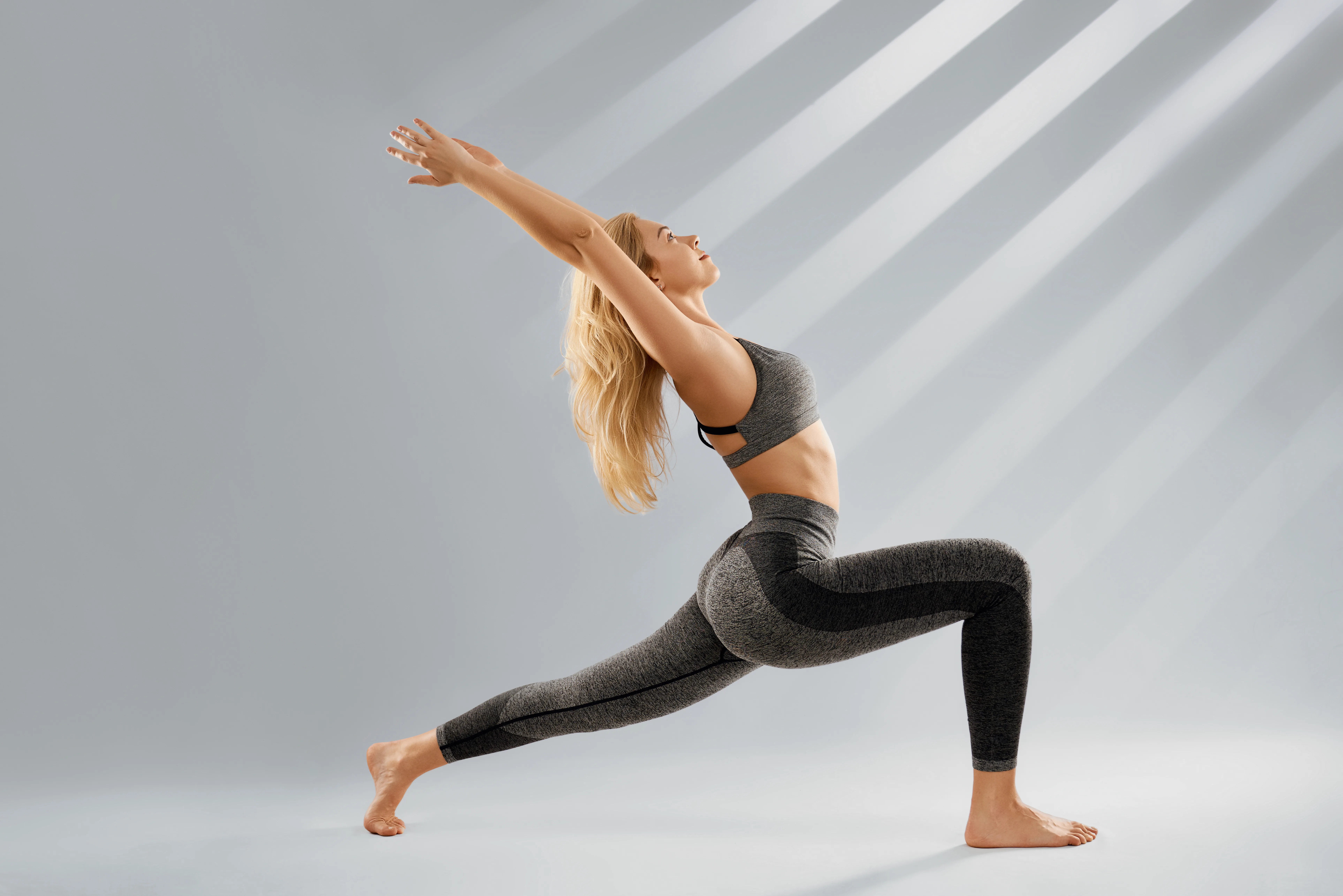
Anyone thinking about starting Pilates keeps circling the same questions. Does it really help you lose weight? How many sessions until I see results? Do I need a reformer, or is a mat enough? The yoga side is no different. Where do I start, which style suits me, can someone who is not flexible even do it? In this article we answer the most asked questions one by one. There is also a small surprise waiting at the end, a chance to try these practices in a truly unusual spot in Istanbul.
Does Pilates help you lose weight?
Do not expect rapid weight loss from Pilates alone. A mat session burns around 170-250 calories and a brisk reformer session 250-450, which is modest compared to running. The real effect of Pilates lies elsewhere. By building muscle mass it creates a body that burns more calories even at rest, and it visibly tones and firms. That is why people who practice regularly notice the difference in the mirror and in their clothes before they see it on the scale. Instructors tend to give the same advice to anyone aiming to lose weight. Pair Pilates with walking or cardio, and of course with a balanced diet.
How many sessions until Pilates shows results?
The method’s founder Joseph Pilates answered this question decades ago. “In 10 sessions you will feel the difference, in 20 you will see the difference, and in 30 you will have a whole new body.” Real life follows a similar pattern. Someone practicing 2-3 times a week feels their posture improving and their lower back easing within the first 3-4 weeks. Visible toning takes around 2-3 months. What determines the outcome is not the number of sessions but not quitting.
What is the difference between reformer and mat Pilates?
Mat Pilates is done on the floor using your own body weight. You need nothing but a mat and you can practice at home. Reformer Pilates is done on that famous machine with a spring-based resistance system. Because the resistance adjusts to the person, it works equally well for someone recovering from an injury and for an experienced athlete looking for a challenge. Which one is better depends entirely on your goal. For general health and posture, mat Pilates is more than enough. For targeted muscle work or recovery after injury, the reformer takes the lead. Most instructors prefer to blend both in the same program anyway.
Does Pilates make you taller?
It does not lengthen your bones, of course. But there is a fact that often goes unnoticed. Sitting all day and gravity compress the spine, and a hunched posture visibly steals 2-3 centimeters from your height. Pilates wins that loss back with exercises that lengthen the spine and straighten posture. This is why regulars say they feel taller. It is not added height, it is an opened, upright body.
Which is better for back pain, Pilates or yoga?
Research supports both for back pain. Which one will help you depends on the source of the pain. If the problem comes from weak core and back muscles and poor posture, Pilates should be the first choice because it strengthens the deep muscles that carry the spine. It is no coincidence that physiotherapists recommend it most often to desk workers. If your pain is linked to stress and muscle tension, yoga may bring faster relief by lengthening the muscles and calming the nervous system. If you have a diagnosed or chronic condition, consult your doctor before starting.
Does yoga help you lose weight?
It depends on the style. Dynamic classes like vinyasa or power yoga can burn 300-400 calories per hour, while calmer styles like yin or hatha burn far less. But yoga’s real relationship with weight is not built on calories. By lowering the stress hormone cortisol it breaks the stress-eating cycle. By sharpening body awareness it makes you genuinely notice what you eat. Indeed, studies show that people who practice yoga regularly are better at keeping weight off in the long run.
How do you start yoga? At home or in a studio?
The healthiest first step is a beginner-level group class where an instructor teaches you how to breathe and align properly. Once the basics are in place, continuing at home with videos works perfectly well. All you need to start is comfortable clothing and a mat. If you are holding back because you are “not flexible at all”, rest easy. Flexibility is not a prerequisite of yoga, it is a result. Two sessions a week, 45-60 minutes each, is plenty as a first goal.
Which yoga style is right for me?
If you are new and want to build solid foundations, slow-paced, posture-focused hatha is a good gateway. Those who want to sweat and build strength and stamina gravitate toward flowing, dynamic vinyasa or power yoga. For people dealing with stress and sleep problems, yin or restorative yoga, where poses are held longer for deep release, tends to work best. If you are undecided, start with hatha. As you get to know your body, your direction becomes clear on its own.
When should you do yoga, morning or evening?
There is no single right answer. Morning yoga wakes up the metabolism and helps you start the day focused. Dynamic flows suit the morning hours best. Evening yoga releases the tension of the day and eases the transition to sleep. Calm, stretch-heavy practices fit the evening better. Still, the real deciding factor is whichever time you can practice consistently.
How many days a week should you do yoga or Pilates?
Two days a week is enough to start, and three is ideal if you want lasting change. Both are low-impact, so practicing daily is not harmful, but leaving the muscles room to recover speeds up progress, especially in the first months. A practice done once a week but every week achieves far more than an intense program crammed into one weekend a month.
Yoga or Pilates? What is the difference and which should I choose?
Both are built on breath and body awareness, which is why they look similar from the outside. The difference is in their goals. Yoga is a mind-body practice thousands of years old and speaks to those seeking flexibility, balance and mental calm. Pilates is an exercise system developed in the 20th century with anatomically precise goals, better suited to those who prioritize core strength, posture and back health. When deciding, ask yourself this. Is it mental fatigue and stress that wears you down, or your posture and muscle strength? If the first weighs heavier, yoga is the right start. If the second, Pilates. And let us add that those who do both usually get the most balanced results. So you do not actually have to choose.
Who can do yoga and Pilates, and who should be careful?
Both are low-impact, which makes them suitable for a wide range of people, from childhood well into later life. Pregnant women are included. Both prenatal yoga and prenatal Pilates, practiced with a doctor’s approval and a specially trained instructor, are considered among the safest forms of exercise to support pregnancy. The door is not closed to people with herniated discs either. On the contrary, a properly programmed Pilates practice is often at the top of physiotherapists’ recommendations. The key phrase here is “properly programmed”. It requires working one-on-one or in a small group with an instructor who knows your condition.
Some situations do call for caution. People diagnosed with osteoporosis should avoid movements involving forward bends and sudden twists, and those with uncontrolled blood pressure should stay away from inversions and hot yoga. Anyone who has had recent surgery, has a heart condition or lives with any diagnosed chronic illness should consult their doctor before starting. In short, yoga and Pilates are not about who cannot do them but about how each person should do them.
How should yoga and Pilates practitioners eat?
Half of what you get from exercise is decided on the mat, the other half in the kitchen. Moving on a full stomach reduces both comfort and performance, so it is best to let at least two to three hours pass after a main meal. Arriving hungry is not right either. A light snack about half an hour before the session, such as a banana, a handful of nuts or a bowl of yogurt, is enough.
After the session, a protein-rich meal matters for muscle recovery. Sources like eggs, yogurt, cheese, legumes or grilled chicken support muscle development when eaten within the first hour or two. Drinking enough water throughout the day should also sit at the top of the list, because the body loses more fluid than you would think even in stretch-focused exercise. In short, there is no magic diet to hunt for. Regular meals, enough protein and plenty of water make up the simplest formula for making the effects of yoga and Pilates visible.
Trying yoga and Pilates somewhere extraordinary: 300 meters above Istanbul
So far we have talked technique. Yet what makes a practice stick is usually not technique but the experience itself. Studies show that simply looking out over wide, open views reduces stress on its own. When breathwork meets a view like that, the effect multiplies.
Which brings us to the surprise we mentioned at the beginning. Emaar SkyView, in collaboration with brands that have made wellness their motto, is taking yoga and Pilates events roughly 300 meters above Istanbul. On the observation deck in Uskudar, against a 360-degree panorama of the Bosphorus and the city skyline, sessions led by expert instructors are open to every level. Even those who have never rolled out a mat can join. The current calendar is announced on the Emaar SkyView Events and on Emaar SkyView social media accounts.
Frequently Asked Questions
Can you do Pilates every day?
You can, because it is a low-impact exercise. For beginners, however, an every-other-day program (3-4 sessions a week) is more effective for muscle recovery.
Do you need to be flexible for yoga?
No. Flexibility is not a prerequisite of yoga but a result gained over time. Every pose has variations adapted to every level.
Up to what age can you do yoga or Pilates?
There is no upper age limit, both disciplines can be adapted to any age. Their contribution to balance and bone health makes them especially valuable in later life. Anyone with a chronic condition should consult a doctor first.
How can I join the yoga and Pilates events at Emaar SkyView?
Events are held periodically. Dates and participation details are shared on the events page of the Emaar SkyView website and on its social media accounts.
One question remains unanswered. What does it feel like to take a deep breath while looking down at Istanbul from 300 meters up? That answer cannot be given in writing.